Skate Culture Was Always About More Than Skating
From the very beginning, skateboarding was a counter-culture movement. It wasn't about fitting in — it was about carving your own path, literally and figuratively.
Young people were drawn to skateboarding not just for the rush, but for what it represented: freedom, individuality, and a refusal to be boxed in. The streets became playgrounds. Empty pools became arenas. And concrete became art.
That creative spirit didn't stay on the pavement. It spread into music, fashion, photography, and visual art — eventually making its way onto walls as skateboard deck art and bold skate culture art that carried the same energy as the movement itself.
Skateboarding didn't just inspire a lifestyle. It inspired an entire visual language.
How Skateboarding Teaches Resilience, Independence, and Creativity
You don't learn to skate without falling. A lot. And that's exactly the point.
Every skater knows the loop: try, fail, adjust, try again. It builds a kind of resilience that's hard to teach in a classroom. You're not relying on a team, a coach's call, or a rulebook. You're figuring it out yourself — on your terms, at your pace.
"You don't learn to skate without falling. And you don't build resilience without getting back up."
For youth, that lesson is transformative. Learning to view setbacks as feedback — not failure — is one of the most powerful things skateboarding teaches. It carries over into school, relationships, and creative work.
That's why we use skateboarding at SkateCube Kids as a vehicle for youth empowerment. The skills learned at the skatepark translate directly into real-world confidence and creative independence.
A Brief History of Skateboard Graphics: When Decks Became Canvases
From blank wood to iconic art
The story of skateboard deck art starts in the 1970s and 1980s, when brands began commissioning artists to design graphics for decks. What started as simple branding quickly evolved into something far more powerful.
Companies like Powell Peralta, Santa Cruz, and Vision brought in artists who pushed boundaries — creating graphics that were psychedelic, provocative, political, and deeply personal. Iconic images like the Screaming Hand and the Ripper didn't just sell boards. They became cultural symbols.
Skaters collected boards the way art lovers collect prints. The deck wasn't just equipment — it was a statement. A visual representation of who you were and what you stood for.
By the 1990s and 2000s, skateboard graphics had become recognized as a legitimate art form in their own right. Today, original decks from that era are displayed in galleries and museums around the world — the ultimate evolution of skateboard decor from sport to fine art.
How Skateboard Wall Art Became a Design Statement
The culture moved off the streets and onto the wall
Interior design has always borrowed from subcultures. And as skateboarding's cultural reach expanded, so did its influence on how people wanted their spaces to look and feel.
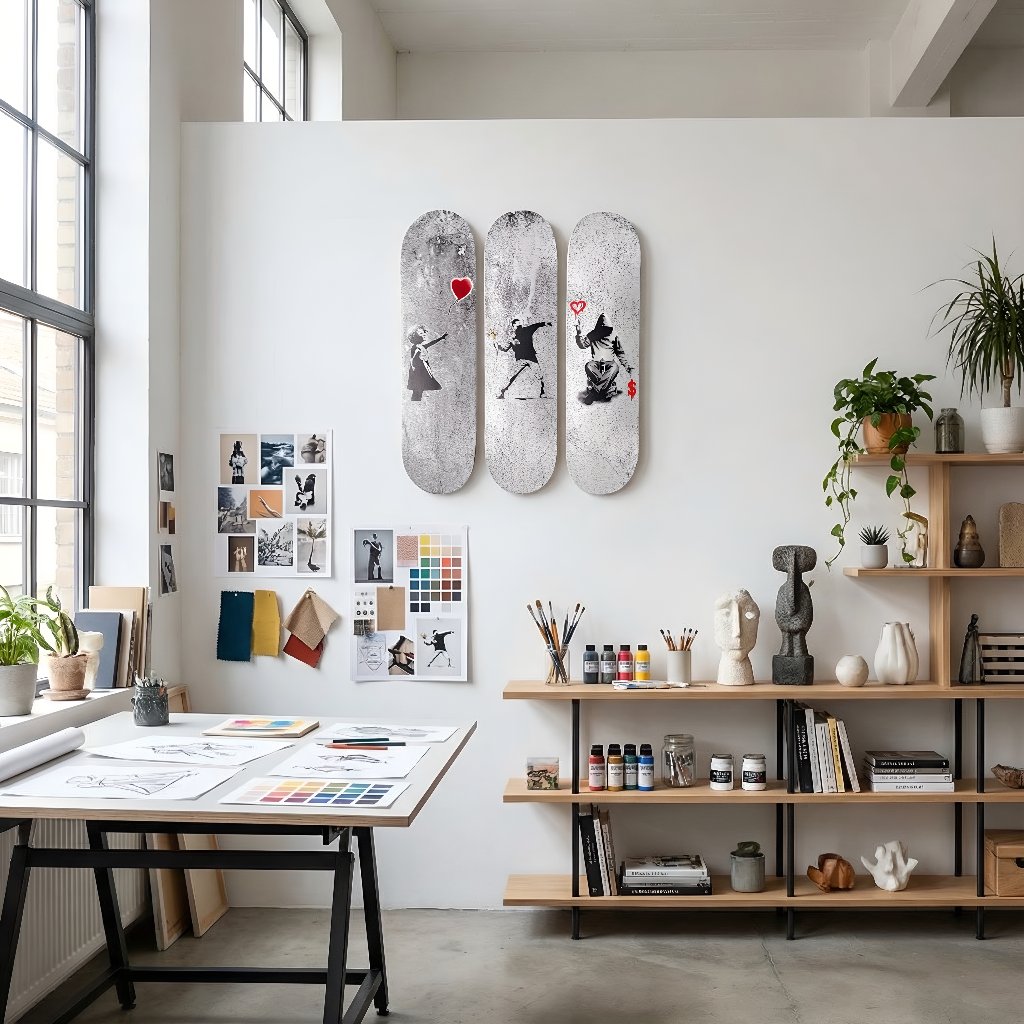
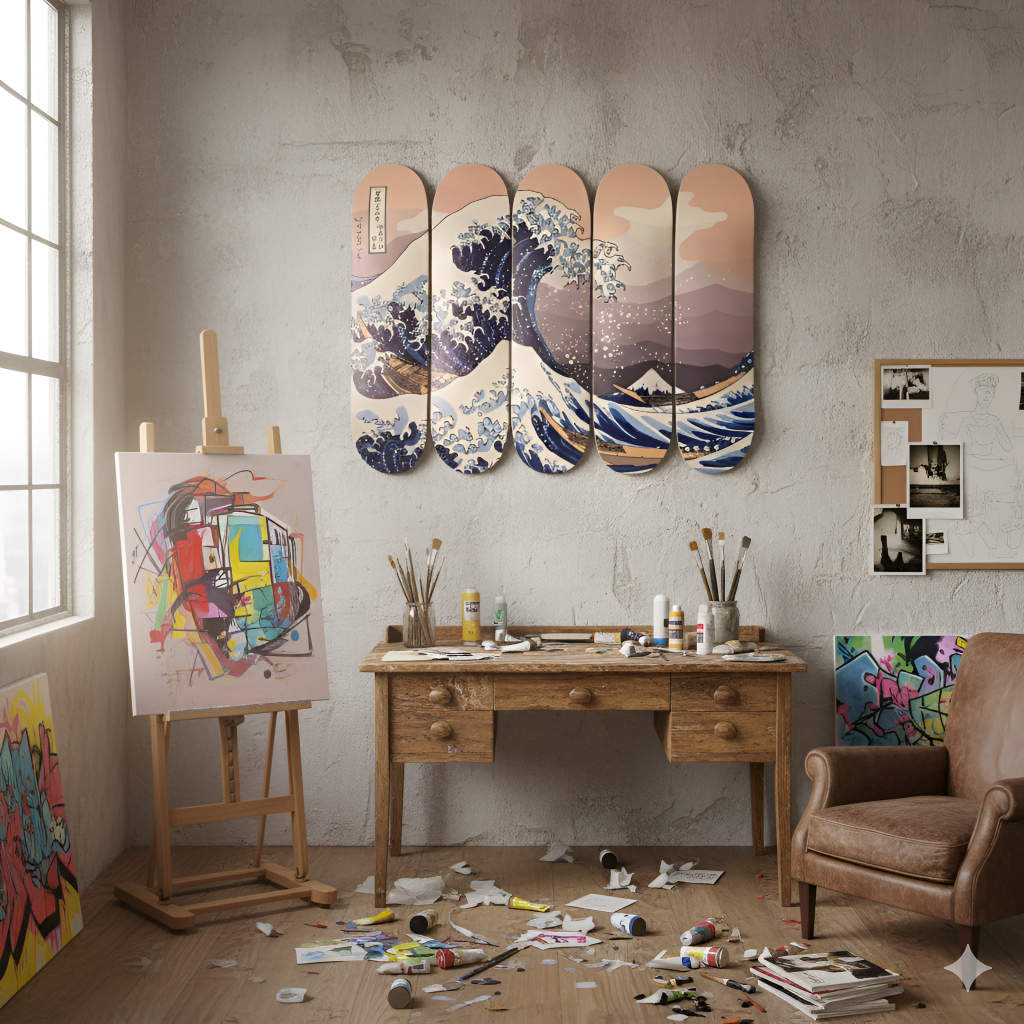
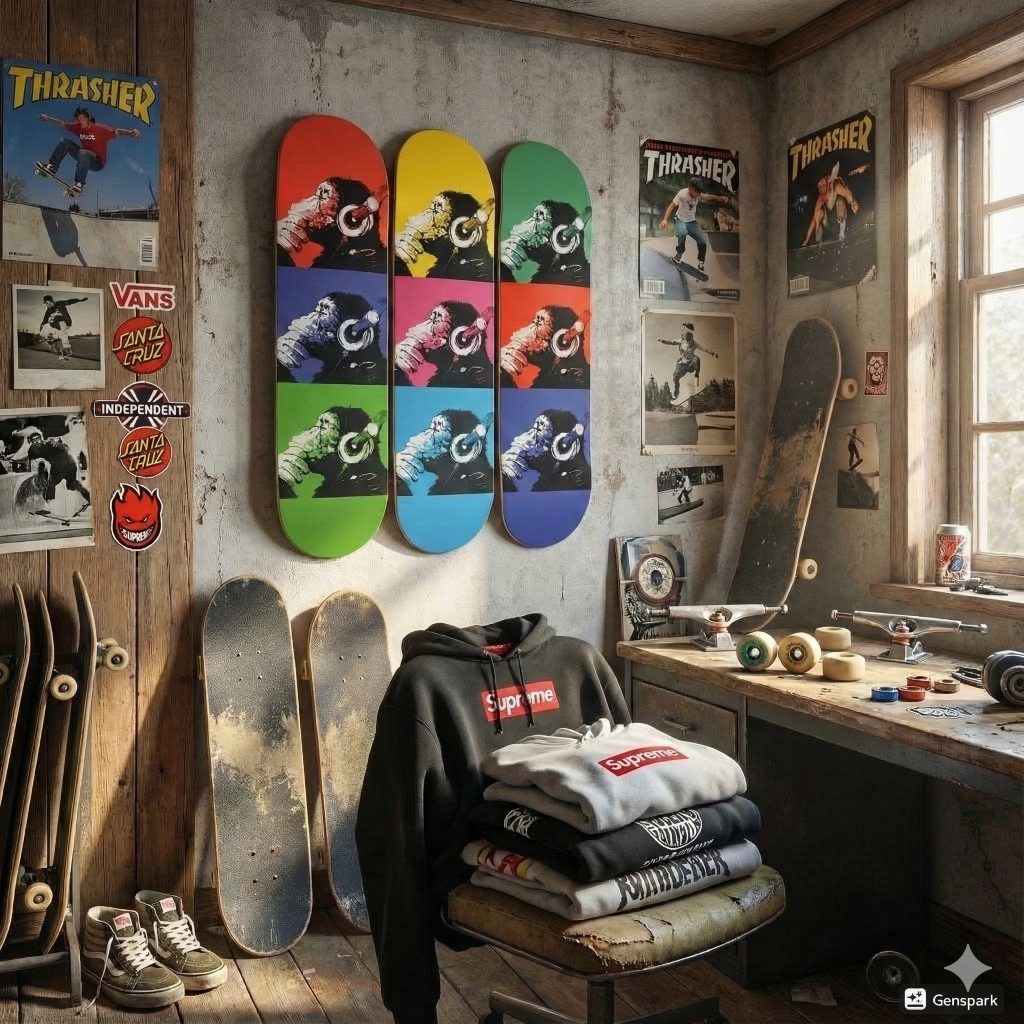
Homes, creative studios, skate shops, youth centers, and offices began displaying skateboard wall art not as a novelty, but as a genuine design choice. The bold graphics, the rawness, the authenticity — it brought something that polished commercial art couldn't: a real story behind the image.
Mounting a skateboard deck on a wall became a way of saying something about who you are. Whether it was an original graphic deck, a custom painted board, or a canvas print inspired by skate culture art, each piece carries the energy of the movement it comes from.
Today, skateboard wall art is a thriving category in interior design — embraced by creatives, parents, youth organizations, and anyone who wants their space to reflect a spirit of independence and originality. Explore our skateboard wall art collection and see how skate culture translates into bold, authentic home decor.